
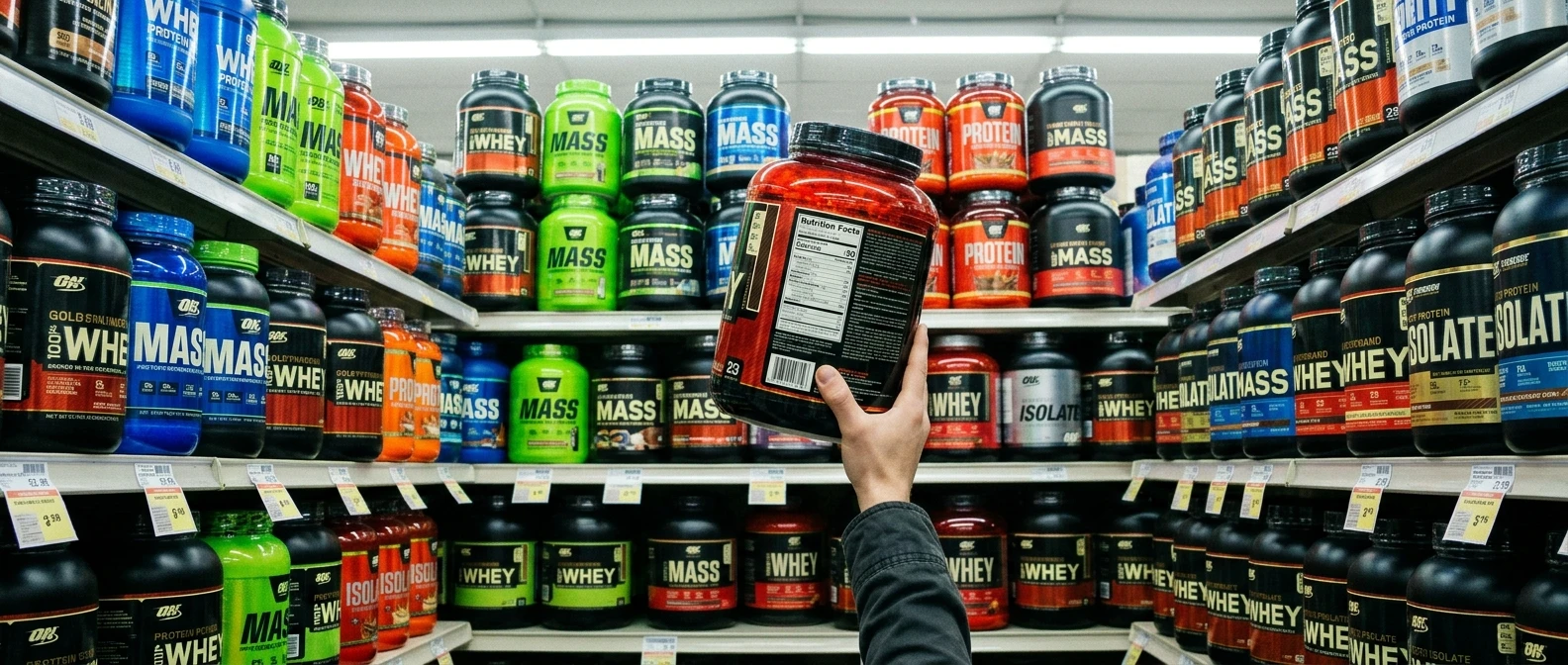
Standing in front of a wall of protein tubs with no idea where to start is a common first experience, and the labels do little to help. The good news is that three questions narrow the whole shelf down to a handful of options: what can your body digest comfortably, what will you actually drink, and what fits your budget?
This guide covers only the buying decision. If you want the background on why protein matters after exercise, the role of protein in muscle recovery covers it. Here we go straight to picking a tub.
Do You Even Need a Powder? A Quick Check Before You Buy
Protein powder is a convenience product. It does not do anything that protein from food cannot do. A scoop in a shaker bottle is simply faster than cooking chicken, opening a tub of Greek yogurt, or scrambling eggs when you are rushing between work and home.
Ask yourself two things before you spend any money:
- Do your regular meals already include a protein source? If breakfast, lunch, and dinner each have eggs, dairy, fish, meat, beans, tofu, or similar, a powder may be optional for you.
- Is there a gap you keep running into? A powder makes sense if you work out in the early morning with no time to eat, or you often reach the end of the day and realize you barely ate protein.
If you are still deciding which supplements are worth considering at all, supplements that complement your workout routine puts powder in context alongside the other common options. If you decide a powder would help, keep reading.
Whey, Casein, or Plant: What Each Type Is and Who It Tends to Suit
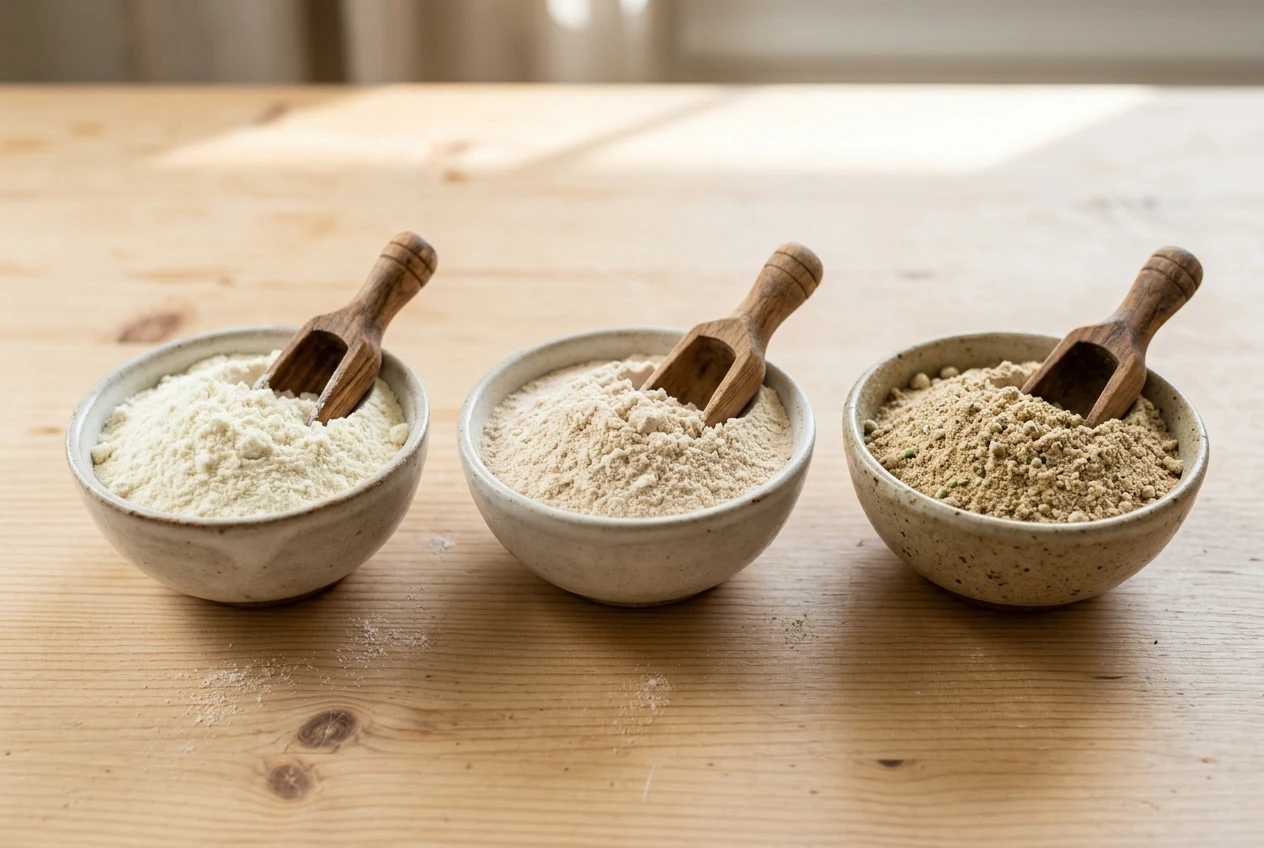
Most tubs fall into three families. Knowing the family tells you a lot before you read anything else on the label.
Whey
Whey is the liquid left over when milk is turned into cheese. It is the most common protein powder, it mixes easily, and it comes in a few forms:
- Whey concentrate is the least processed form. It keeps a little more lactose (milk sugar) and fat, and it is usually the cheapest.
- Whey isolate is filtered further to remove most of the lactose and fat. It tends to cost more, and people who feel uncomfortable with dairy often try it first.
- Whey hydrolysate is partly broken down in advance. It is typically the most expensive and rarely necessary for a beginner.
Whey tends to suit people who tolerate dairy fine and want a simple, widely available option with plenty of flavor choices.
Casein
Casein is the other main protein in milk. It digests more slowly and tends to make a thicker, pudding-like shake. Some people like it in the evening because it feels more filling. For a beginner who wants one tub to cover a post-workout shake, casein is usually a second purchase, not a first.
Plant-based
Plant powders are made from sources such as pea, brown rice, soy, hemp, or blends of several. They suit people who avoid dairy, follow a vegan diet, or simply prefer them. Texture can be a little grainier than whey, and the flavor is sometimes earthier, so the taste check later in this guide matters more here. Blends of two plant sources are common, and they exist partly because a single plant source can be lower in some amino acids than the others.
A simple starting rule: if dairy sits well with you, whey concentrate or isolate is the easiest place to begin. If it does not, go plant-based or try an isolate. That answers your first question.
Reading the Label in Two Minutes
Labels are designed to catch your eye with the front of the tub. The useful information is on the back, and you only need to check three things.
1. Serving size. Find the scoop weight in grams and the number of servings per container. Some brands use a big scoop, which makes the protein number look impressive, while others use a smaller scoop.
2. Protein per serving. Look at the grams of protein in one serving, not the weight of the scoop. A 35-gram scoop might contain 25 grams of protein, with the rest being flavoring, sweeteners, and other ingredients. Many tubs deliver somewhere in the neighborhood of 20 to 30 grams of protein per serving, but check each label, because it varies by brand and type.
3. The ingredient list. Ingredients are listed from most to least by weight. The protein source should be the first item. If sweeteners, thickeners, or flavorings come before the protein, you are buying a flavored powder with some protein in it.
Then take a few seconds to check these extras:
- Allergen statement. It lists milk, soy, and other major allergens, often in bold below the ingredients.
- Third-party testing. Some tubs carry a seal from an independent testing group, such as NSF Certified for Sport or Informed Choice. Supplements are not approved by regulators before they go on sale in many countries, so an independent seal is a useful extra signal that what is on the label matches what is in the tub. It is not required for a beginner, but it can break a tie between two similar tubs.
Sweeteners, Fillers, and Add-Ons You Can Skip as a Beginner
A longer ingredient list does not mean a better product. For your first tub, simpler is easier to judge.
Sweeteners and flavors. Most flavored powders contain a sweetener such as sucralose, stevia, or sugar. None of these is a problem for most people, but some find certain sweeteners leave an aftertaste or upset their stomach. If you are sensitive, an unflavored or lightly sweetened option lets you control what goes in.
Thickeners and gums. Ingredients like xanthan gum or guar gum make a shake feel creamier. They are common and generally harmless, but a few people notice bloating. If you do, try a different tub with fewer of them.
Add-ons. You will see tubs promising extras: added creatine, greens blends, “fat burner” blends, digestive enzymes, long vitamin lists, and “proprietary blends” that hide the amounts. As a beginner, skip the proprietary blends in particular, because you cannot tell how much of anything you are getting. Buying a plain protein powder and adding other supplements separately, only if you want them, gives you more control.
Digestion, Allergies, and When to Check With Your Doctor First
If you take away only one thing from this section, take this: a protein powder that upsets your stomach is the wrong powder for you, however good its reviews are.
Here is how common problems tend to line up with the types:
- Gas, bloating, or loose stools after a whey concentrate shake may point to lactose sensitivity. Whey isolate or a plant-based powder is a reasonable next thing to try.
- A true milk allergy is different from lactose sensitivity and is not solved by switching to isolate, because the milk proteins are still there. Avoid all dairy-based powders in that case.
- Soy or other allergies mean checking the allergen statement on every label, including plant blends.
Talk to your doctor or a registered dietitian before you start a powder if any of these apply to you:
- You have kidney disease or another condition that requires you to manage how much protein you eat.
- You are pregnant or breastfeeding.
- You take regular medication and are unsure whether supplements are compatible.
- You have a known food allergy and are unsure how to read labels for it.
- You have a history of disordered eating.
A short conversation is cheap compared with guessing. Start with a half serving the first time you try any new powder, so you can see how your body reacts before committing to full scoops.
Taste, Texture, and Mixability: How to Avoid Buying a Tub You’ll Hate
You will only use a protein powder that you enjoy drinking. A tub that tastes chalky will sit in the cupboard, and that is money wasted. A few habits reduce that risk:
- Buy the smallest size first. Many brands sell a small tub, a sample bag, or single-serve sachets. Paying a little more per serving for a trial is cheaper than a big tub you dislike.
- Pick a flavor you already like. Chocolate and vanilla are the usual safe starting points, because they are easy to mix into other things later.
- Read reviews for the specific flavor. Reviews for the brand overall can hide the fact that one flavor is excellent and another is not. Search for words like “grainy,” “clumpy,” “aftertaste,” and “mixes well.”
- Expect texture differences by type. Whey usually mixes smoothly, casein is thick, and plant powders can be slightly gritty.
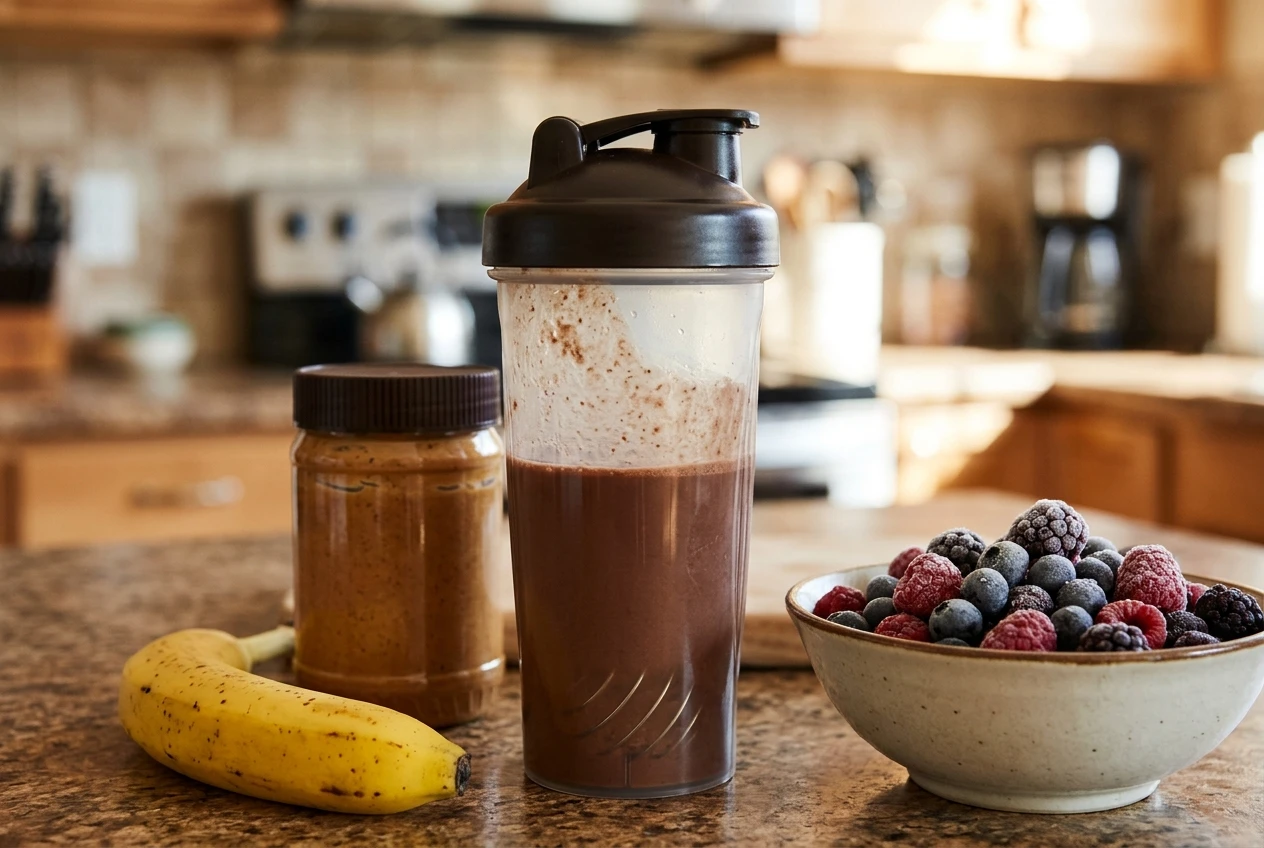
Mixing matters too. Put the liquid in the shaker first and the powder on top, which helps prevent clumps stuck at the bottom. Shake for 20 to 30 seconds. A blender bottle with a wire whisk ball helps, and so does a very cold liquid for taste. If the shake is still unpleasant, blend it with a banana, a spoonful of peanut butter, or a handful of frozen berries, or stir it into oatmeal or yogurt.
Setting a Budget and Comparing Tubs by Cost per Serving
The price on the front of the tub tells you very little, because tubs come in different sizes and use different scoop sizes. Two quick calculations make tubs comparable.
Cost per serving: the price divided by the number of servings in the tub.
Cost per gram of protein: the price divided by the total grams of protein in the tub (grams of protein per serving times servings).
Here is an example using made-up numbers, just to show the math. Say a tub costs $40 and has 30 servings with 24 grams of protein each. Cost per serving is about $1.33. Total protein is 720 grams, so the cost is about 5.5 cents per gram. A second tub at $30 with 20 servings of 20 grams works out to $1.50 per serving and 7.5 cents per gram, so the cheaper-looking tub is actually the pricier choice.
A few budget rules for beginners:
- Decide your monthly limit first. Then you can rule out anything outside it.
- Use cost per gram of protein to compare tubs of different sizes.
- Do not buy the biggest tub until you have finished a small one. A bulk discount does not help if you stop using the flavor.
- Treat the cheapest option with a little caution. If a price looks very low, check for third-party testing and a clear ingredient list.
If you buy through any product link on this site, the affiliate disclosure explains how the site earns from those purchases.
Your One-Page Shopping Checklist, Plus How to Fit the Shake Into a Busy Day
Copy this list or screenshot it before you shop. If a tub passes every line, it is a reasonable first pick.
Type
- Whey if dairy sits well with you; isolate or plant-based if it does not
- Dairy-free if you have a milk allergy
Label
- Protein source is the first ingredient
- Grams of protein per serving are clearly stated, and you know the scoop size
- No “proprietary blend” hiding the amounts
- Allergen statement checked
- Independent testing seal, if you can find one at a similar price
Taste and texture

- A flavor you already like
- A small size or sample first
- Reviews for that specific flavor read
Budget
- Cost per serving and cost per gram of protein worked out
- Within your monthly limit
Health
- Doctor or dietitian consulted if any condition in the earlier list applies
- Half serving for your first try
Once you have a tub at home, the shake only works if it fits into your day. Some simple ways to make that happen:
- Pre-load the shaker. Put the dry powder in the bottle the night before, add liquid when you need it, and shake.
- Keep one shaker in your gym bag or car. Single-serve sachets work well for this.
- Pair it with something you already do. A shake right after your workout, or with breakfast on days you skip it, is easier to remember than a new time slot.
- Count it as a win. Getting your workout done and having a shake afterward is progress, even on a rushed day.
A shake covers one part of what you eat around your workout. To plan the rest of it, including what to eat alongside your shake, head to the ultimate guide to post-workout nutrition for muscle recovery and build a simple routine you can keep up.