Figuring out what to wear to workout for beginners can feel like a bigger project than the workout itself. Store shelves are packed with matching sets and gadgets, and it is easy to assume you need all of it before you start. You don’t. The goal for your first few sessions is that nothing rubs, slips, or makes you think about your clothes instead of your movement.
This guide goes through the most common comfort problems one at a time and matches each with the simplest fix. Some fixes cost nothing. A few are worth a small purchase.
Start With What You Already Own (and When It Stops Working)
Your first workout clothes can come from your closet. A t-shirt you don’t mind sweating in, shorts or stretchy pants, and the most comfortable sneakers you have are enough for a walk, a bodyweight session, or a beginner video at home.
Before you begin, run a quick test. Squat, reach overhead, and march in place for a minute. Check these things:
- Does the waistband stay put, or do you tug it?
- Does the shirt ride up or cling uncomfortably?
- Can you move your arms and knees freely?
- Do your shoes feel secure without pinching?
If everything passes, you’re ready. If you keep adjusting something, that item is your first upgrade. Pay attention to how your clothes feel about ten minutes in, because that is when sweat and friction show up. A piece that is fine for standing around the kitchen can behave very differently once you’re moving.
Why Cotton Feels Awful Once You Sweat, and What to Wear Instead
Cotton absorbs moisture and holds on to it. Once it is damp, it gets heavy, clings to your skin, and feels cold when you stop moving. Wet fabric also rubs more than dry fabric, which is why a shirt that felt soft at the start can irritate your underarms or shoulders by the end.
Fabrics made for exercise, usually polyester, nylon, or blends with spandex, move sweat away from your skin so it can evaporate. Merino wool does a similar job and tends to stay comfortable for longer between washes. Check the tag. If it says “moisture-wicking” or lists polyester or nylon first, it will probably feel better than a cotton tee.
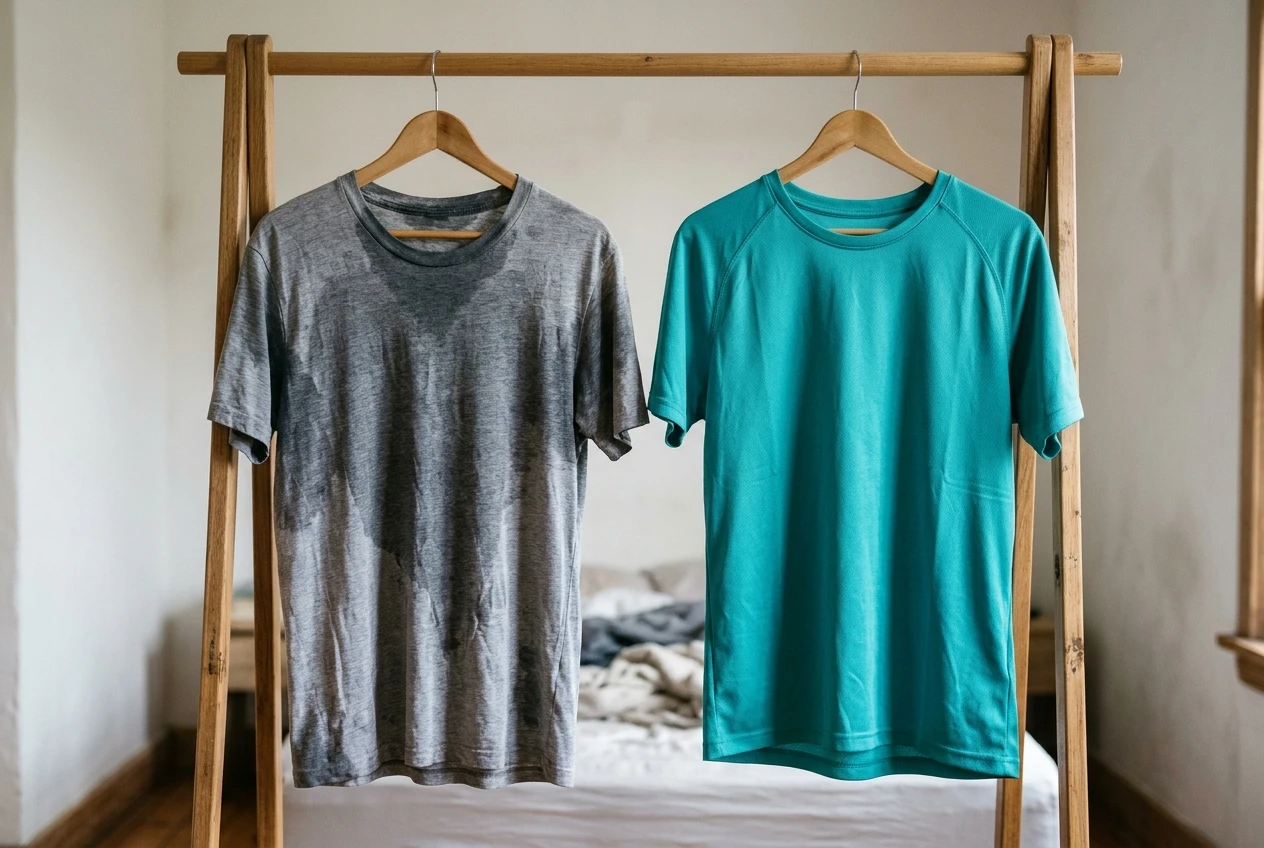
Cotton is still fine for a short, easy walk or a gentle stretching session where you won’t sweat much. The trouble starts when your workouts get longer or harder. A good first purchase is one or two wicking tops, since you wear a top every session and it touches a lot of skin.
Shoes That Fit Your Workout, Not Just Your Foot Size
Shoes matter more than any other piece of clothing, and the right pair depends on what you are doing. A cushioned walking or running shoe suits regular walking and jogging. For strength work, a flatter, more stable sole keeps you steadier than a soft, springy one. If you do a mix, a general cross-training shoe is a reasonable single pair.
Fit is where most beginners go wrong. Look for these:
- About a thumb’s width of space past your longest toe, so your toes don’t hit the front.
- A heel that stays down when you walk, without lifting out of the shoe.
- Enough width that your toes can spread without the sides pressing in.
Try shoes on later in the day, when your feet have spread a little, and wear the socks you will exercise in. Walk around the store or your living room for a few minutes before you commit.
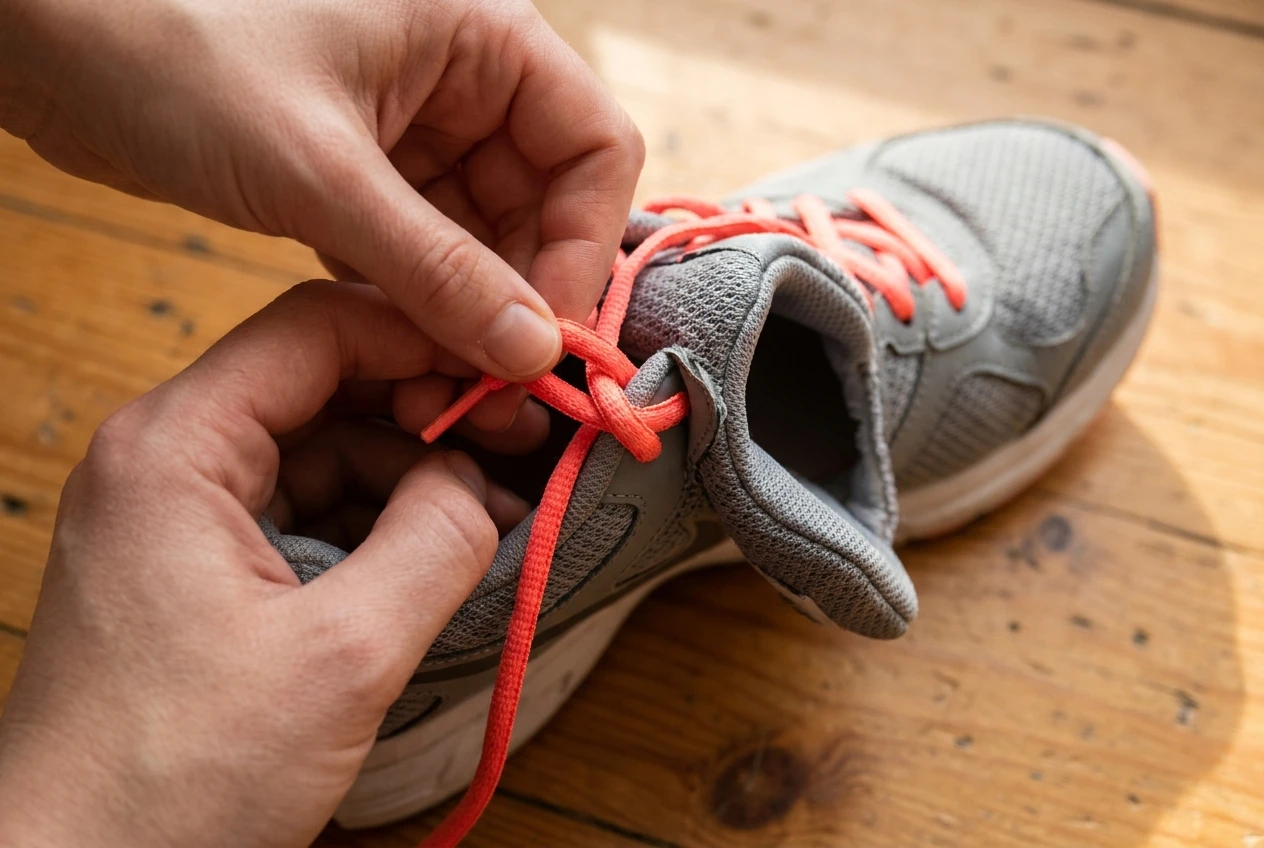
If your heel slips, don’t give up on the shoe right away. Use the extra top eyelet to make a heel lock with your laces. Thread each lace through the top eyelet on the same side to form a small loop, then pass the opposite lace through that loop before tying. This pulls the heel back and keeps it from sliding. Old shoes can cause trouble too. If the tread is smooth, the cushioning feels flat, or your feet and shins ache after sessions that used to feel fine, the pair may be worn out.
Fixing the Little Annoyances: Chafing, Slipping Waistbands, and Straps That Dig
Small irritations are what end a routine, because they make each session slightly unpleasant until you stop showing up. Most have simple fixes.
Chafing
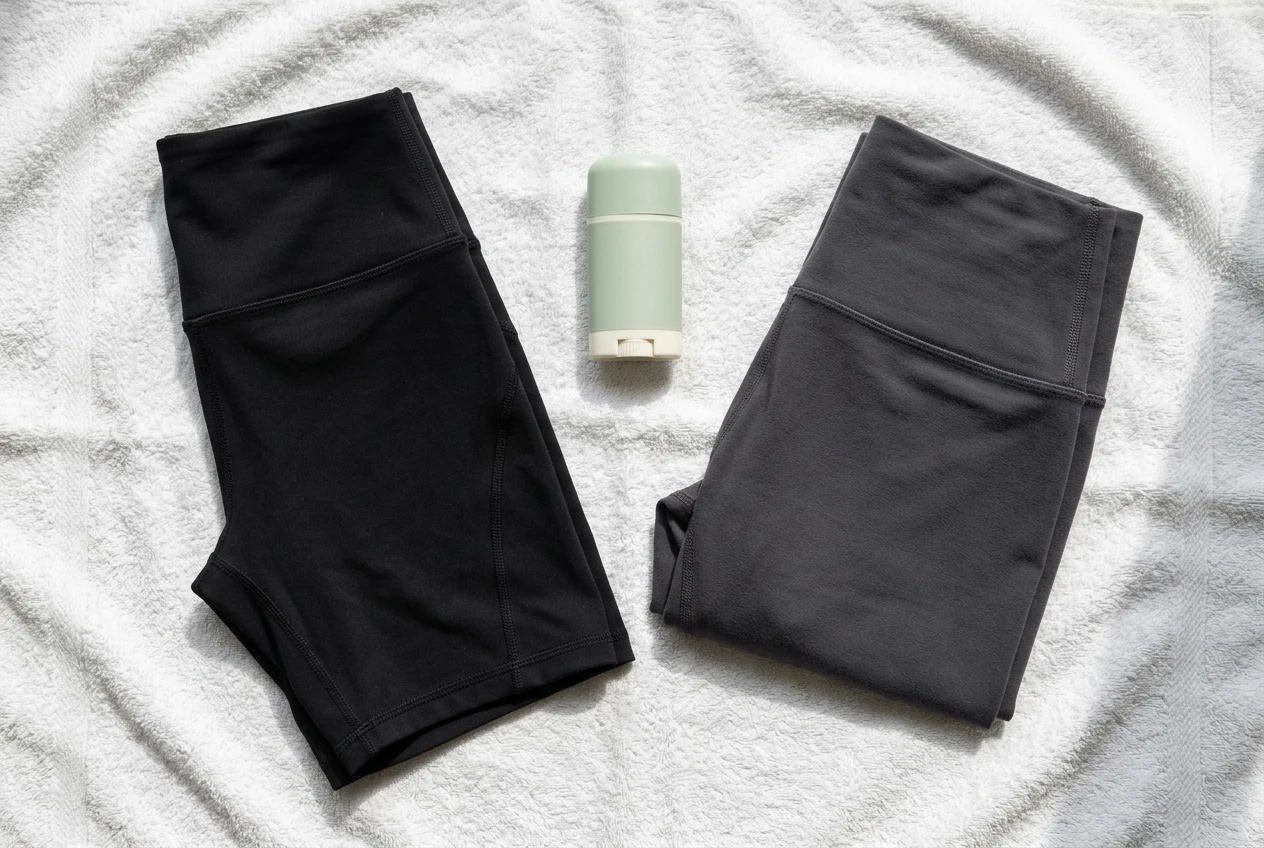
Chafing comes from skin rubbing on skin or fabric, made worse by moisture. Common spots are the inner thighs, underarms, and under the bra band. Try these:
- Wear fitted shorts or leggings, or choose a longer inseam so your thighs don’t touch.
- Pick garments with flat seams and cut out scratchy tags.
- Apply an anti-chafe balm or stick to problem areas before you start.
- Change out of damp clothes soon after you finish.
Waistbands that slip
If your waistband rolls down or you keep hiking up your pants, look for a wide, flat waistband that sits higher on your waist. A drawcord helps, and so does a pair of fitted shorts that stay in place without clinching. A pair of leggings with a snug but not tight waist often solves it. Elastic that digs in is a sign the size or cut is wrong, so skip the tight options.
Straps that dig
Bag straps, bra straps, and even the straps on a water bottle carrier can press into your shoulders or neck. Adjust them so the load sits evenly. Padded straps are more comfortable if you carry a gym bag to and from work. Try a few minutes of the actual movement at home before you decide an item is a keeper.
Support Pieces Worth Considering: Sports Bras, Socks, and Light Layers
A few items do more for comfort than their size suggests.
Sports bras. Match the bra to your activity. Walking and yoga need less support than jumping or running. A good fit has a band that is snug and level around your back, without riding up, and straps that hold you without cutting into your shoulders. Do some jumping jacks or a short jog in place at home. If you feel a lot of bounce, or the band shifts, try a different size or style. Many people find that a higher-support bra is more comfortable even for gentle workouts, so it is worth trying more than one.
Socks. Socks affect blisters and sweaty feet more than most people expect. Choose pairs made from synthetic or wool blends instead of cotton, with a seamless or flat toe. They cost little and make a noticeable difference, especially if you are walking or running.
Light layers. A thin zip-up top or long-sleeve shirt lets you start warm and take it off as your body heats up. Workouts feel better when you are slightly cool at the start, because you warm up quickly. A layer you can tie around your waist or toss in a bag is handy for the walk home too.
Small Accessories That Make Short Workouts Easier: Water Bottle, Gym Bag, and Grip Help
None of these are required, but each removes a small obstacle.
A water bottle. Having water within reach makes it easier to drink as you go. Pick one that is easy to open with one hand and fits where you will keep it. If you want to know what to drink and when, the guide on workout hydration covers it.
A gym bag. A bag you keep packed removes a barrier on busy days. Include a spare shirt, socks, and a small towel. If you take your shoes with you, a separate pocket or a plastic bag keeps them from soiling everything else.
Grip help. If your hands get sweaty or sore when holding dumbbells or a bar, a small towel for wiping your palms is the cheapest fix. Workout gloves with light padding can reduce pressure and rubbing on your palms. If your wrists ache, check the basics first: use lighter weights, keep your wrists straight instead of bent back, and review your technique with the tips in maintaining proper form to avoid injuries. Pain that continues is worth bringing up with a doctor or physical therapist.
A Starter Kit You Can Build One Piece at a Time
Buy in order of how much each item affects your comfort. Wear what you have until a specific problem shows up, then fix that problem.
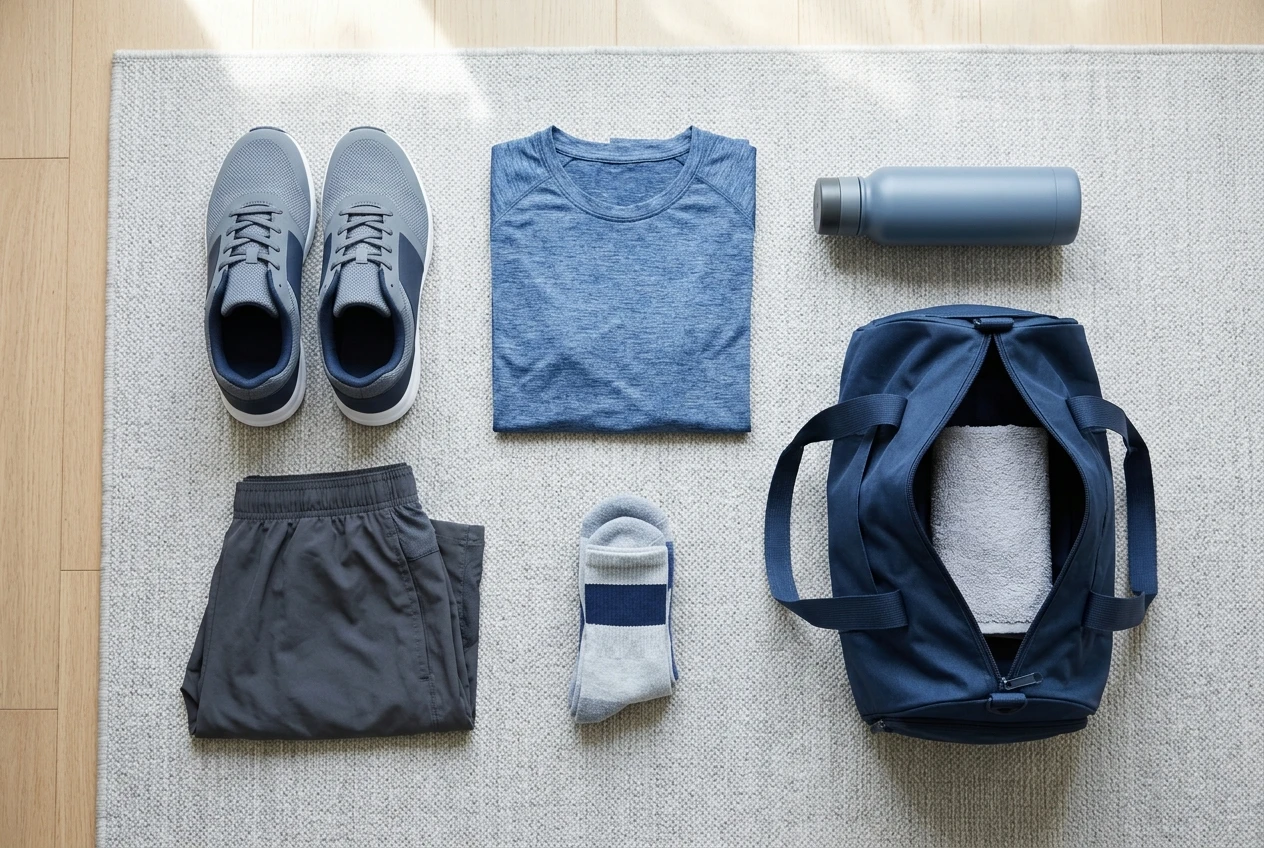
- Shoes that fit your main activity. This is the one item worth spending a little more time on.
- A supportive sports bra, if it applies to you. Try it on and move around before you commit.
- One or two moisture-wicking tops. They let you rotate while one is in the wash.
- Wicking socks. A few pairs cover a week of sessions.
- Comfortable bottoms that stay put. Fitted shorts or leggings with a flat waistband.
- A water bottle you like. Keep it where you will see it.
- Extras as needed: an anti-chafe balm, a light layer, a gym bag, or gloves.
Look for sales, secondhand finds, and basic versions of each item. Plain, well-fitting clothes work just as well as expensive sets. Buying one piece at a time also teaches you what you actually like, so you don’t end up with a drawer of things that don’t work for you.
Pick just one comfort problem from your last workout and fix it this week, then come back and read the guide to building a weekly workout schedule to plan when you’ll wear it all.