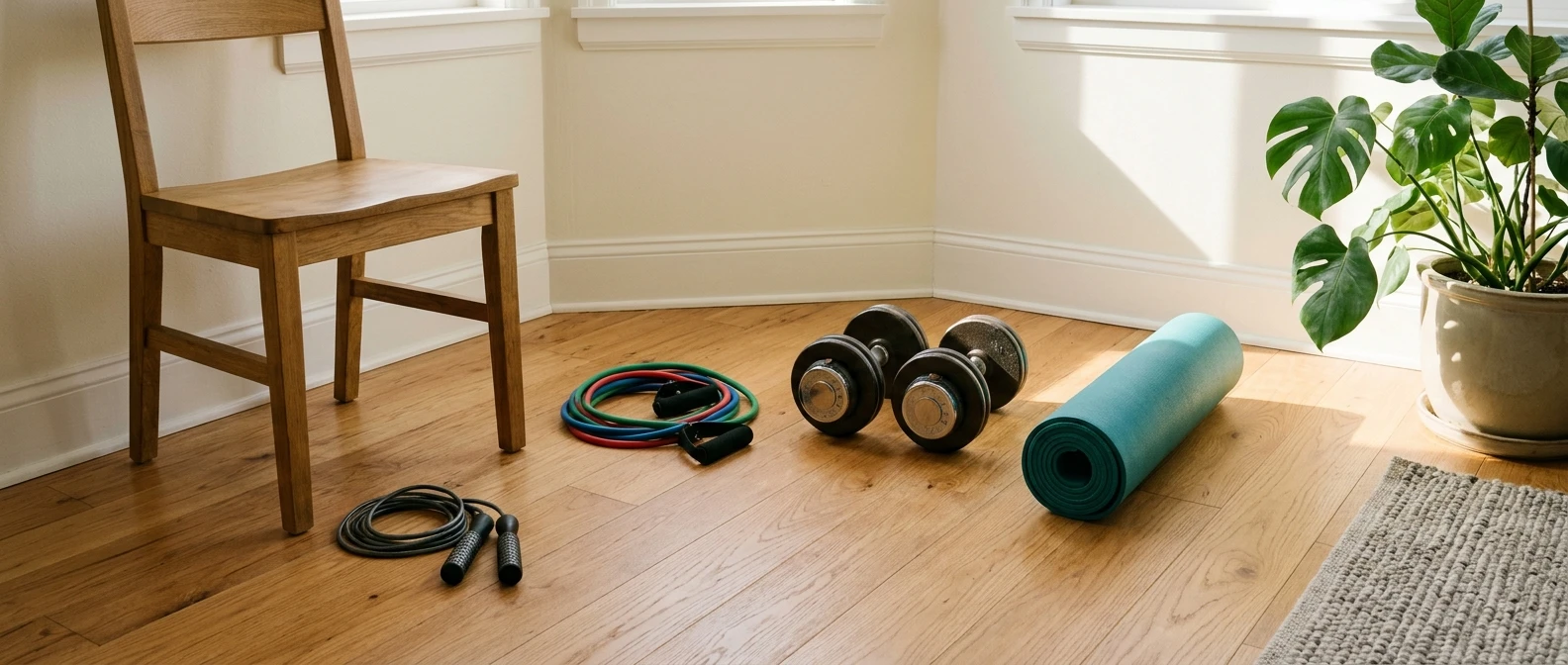
Walk into any sporting goods store or scroll a fitness site and you will see racks, cable machines, treadmills and rowing machines. A beginner with a packed schedule needs almost none of it. Five inexpensive, space-friendly pieces cover strength, cardio and mobility, which is enough to build a steady routine.
This list of home gym equipment for beginners is short on purpose and ordered the way you should buy. Each item comes with what it replaces, who it suits best, and what to skip for now. Start with number one, use it for a couple of weeks, and add the next piece only when you have a reason to.
Why five pieces is plenty when you’re just getting started
A beginner’s progress comes from showing up regularly, not from owning a wide range of equipment. In the first weeks, almost any form of resistance is new enough to make your body adapt. A few pieces of gear that you can grab in under a minute will get used. A corner full of machines tends to get avoided.
Five pieces also cover the three things a balanced routine needs:
- Strength: resistance bands, adjustable dumbbells and a bench or chair
- Cardio: a jump rope
- Mobility and recovery: an exercise mat, helped along by the bands
Buying fewer things also leaves you with a clearer picture of what you like. If you enjoy the jump rope and ignore the dumbbells, that is useful to know before you spend more.
Resistance bands: the easiest first purchase
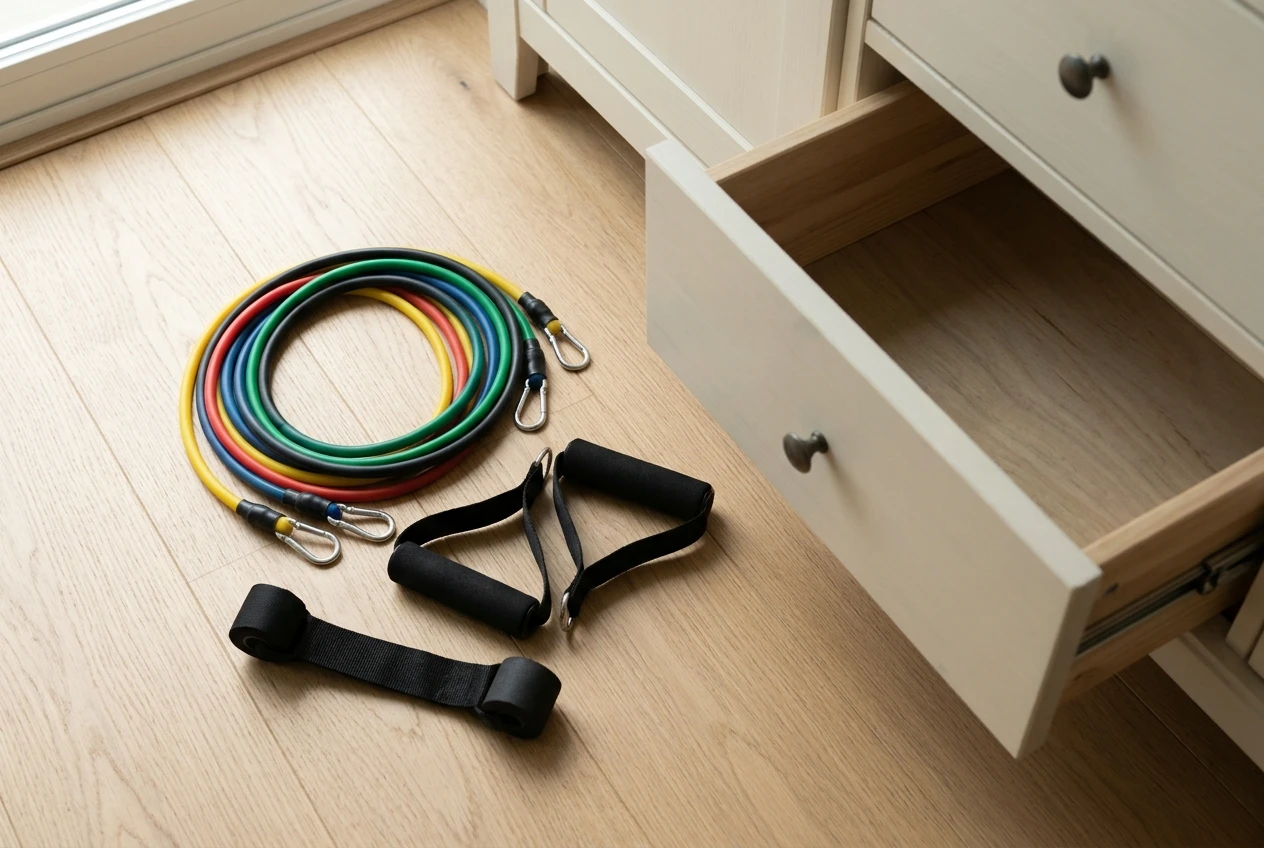
Resistance bands are the best first purchase because they cost little, weigh almost nothing and fit in a drawer. They replace a surprising amount of gym equipment: rows, presses, squats with extra load, glute work and shoulder exercises can all be done with a band anchored under your feet or around a sturdy door frame attachment.
Who they suit: anyone who wants to start this week with minimal commitment, travels or works away from home, or feels nervous about lifting heavy things on their own. Bands add tension gradually as they stretch, which many beginners find gentler on the joints than a sudden heavy weight.
What to look for: a set with several resistance levels, so you can use a light band for shoulders and a heavier one for legs. Loop bands (a closed circle) suit lower-body work. Tube bands with handles suit rows and presses. If you can only pick one style, tube bands with handles and a door anchor cover more upper-body exercises, while loop bands are the more compact option.
What to skip for now: a huge multi-piece kit with ankle straps, multiple attachments and a carrying case you will not need. Check the bands for nicks and cracks before each session and replace any that look worn, since a band that snaps can sting.
Bands are also where you can learn the movement patterns first. If you want a refresher on technique before you add load, the guide on maintaining proper form to avoid injuries is worth a read.
Adjustable dumbbells: one set that grows with you
Once bands feel easy, adjustable dumbbells are the logical next step. One pair replaces an entire rack of fixed-weight dumbbells, because you change the weight by moving a dial, pin or selector instead of buying a new pair every time you get stronger.
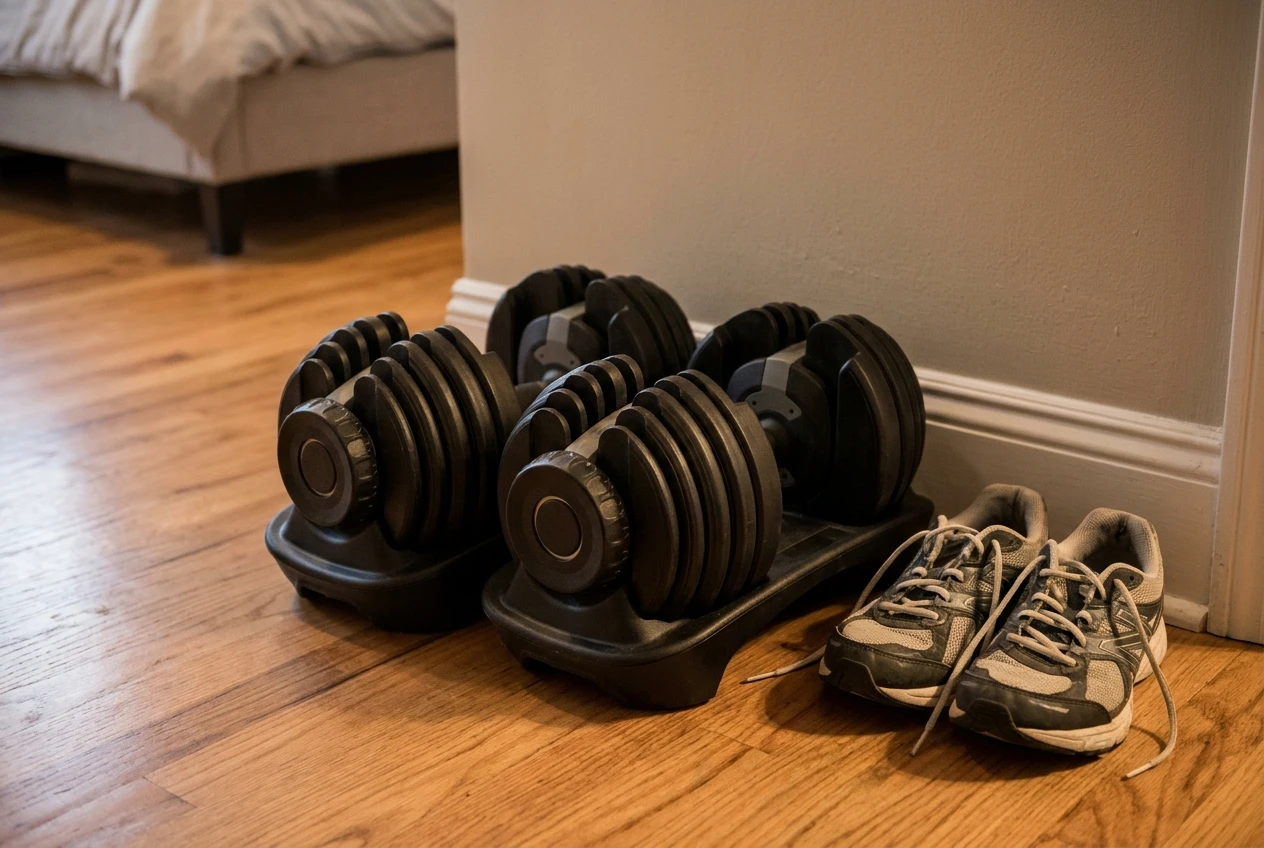
What they replace: a full set of individual dumbbells, and some barbell exercises. Goblet squats, rows, shoulder presses, lunges, curls and Romanian deadlifts all work with a single pair.
Who they suit: beginners who expect to get stronger over the next several months and have limited floor space. They are especially useful if you share a home, since two dumbbells take far less room than a rack.
What to look for:
- A weight range that starts light enough for your weakest exercise, such as lateral raises, and goes high enough for your strongest, such as squats or deadlifts
- An adjustment mechanism that is quick and simple to use, because a fiddly one will discourage you from changing weights mid-workout
- A sturdy tray or stand if one comes with the set, so the dumbbells are not left rolling around
- A clear return policy, since fit and feel matter more than the marketing
Read the product listing carefully for the real weight increments and total weight range before you buy. Different brands handle these differently, and the details are specific to each model.
What to skip for now: a heavy barbell and plate set, or a power rack. These take real space and real money, and a beginner can progress for a long time with dumbbells and bodyweight work.
An exercise mat: the comfort that keeps you showing up
A mat sounds like the least exciting item on the list, and it earns its place anyway. Planks, glute bridges, sit-ups, stretching and floor-based core work are far more comfortable on a cushioned surface than on hardwood, tile or carpet. If the floor hurts your wrists, knees or spine, you will find reasons to skip the session.
What it replaces: a padded gym floor area, and some of the comfort you would otherwise get from a studio class.
Who it suits: everyone, but especially people who plan to do mobility work, stretching or any floor exercise. It also defines a spot for your workout, and a visible mat can act as a prompt to start.
What to look for: thick enough to cushion your knees and spine without being so soft that it wobbles during balance moves. A non-slip surface matters more than most extras. Choose a material you can wipe clean easily, since you will be sweating on it.
What to skip for now: yoga blocks, straps, foam rollers and specialty accessories. You can add them later if your routine turns toward yoga or deeper recovery work. For recovery ideas that need no equipment, see these post-workout recovery tips to reduce muscle soreness naturally.
A jump rope: quick cardio when your day is packed
A jump rope is the cardio piece on this list, and it fits the busy schedule better than almost anything else. It takes a few seconds to pick up, it packs into a bag, and a short session raises your heart rate quickly.
What it replaces: a treadmill, an exercise bike or a trip to the gym for cardio. For a beginner, a few minutes of intervals with a rope can stand in for a longer, slower session on a machine.
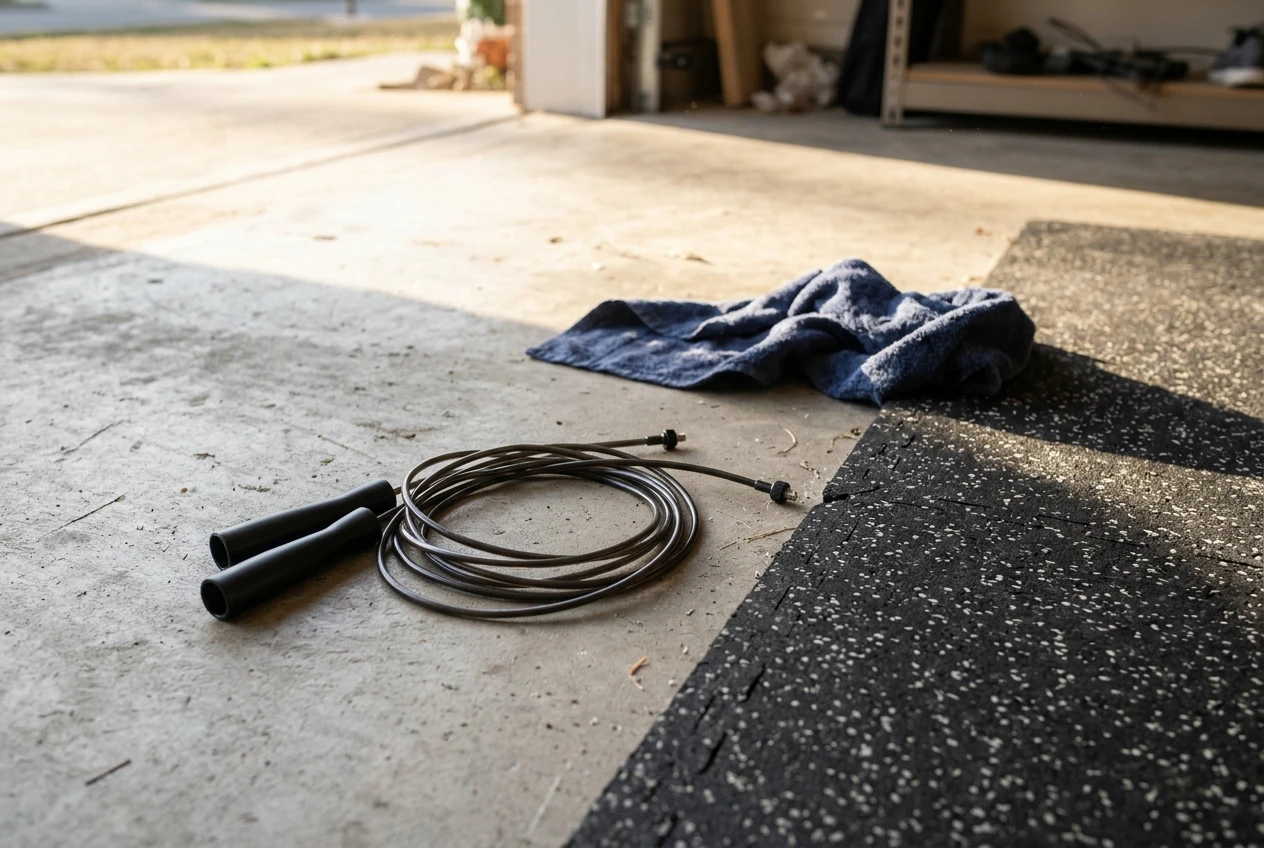
Who it suits: people with ten spare minutes who would rather do a brisk burst of effort than a long workout. It also suits anyone who wants a cardio option that works in a garage, a backyard or a hotel room.
What to look for: a rope that is adjustable in length, so it reaches roughly your armpits when you stand on the middle. A smooth handle and a swivel mechanism help the rope turn cleanly. Make sure you have enough ceiling height and a floor that is not too hard, because jumping repeatedly on concrete is rough on shins and ankles.
How to start: skipping rope is harder than it looks. Alternate short bursts with rest, for example a short set of jumps followed by a longer pause, and build from there. Missing the rope constantly at first is normal and improves with practice. If you like the interval style of training, the guide to high-intensity interval training advantages explains why short, hard efforts work for people short on time.
What to skip for now: weighted ropes, counters and speed-rope upgrades. A basic rope teaches the same skill.
A sturdy bench or chair: unlocking more exercises
A bench adds a lot of variety for little cost. It lets you do exercises that are hard or impossible from the floor alone: step-ups, seated shoulder presses, incline or decline push-ups, tricep dips, split squats with the back foot raised, and supported rows.
What it replaces: the benches and boxes you would find in a commercial gym.
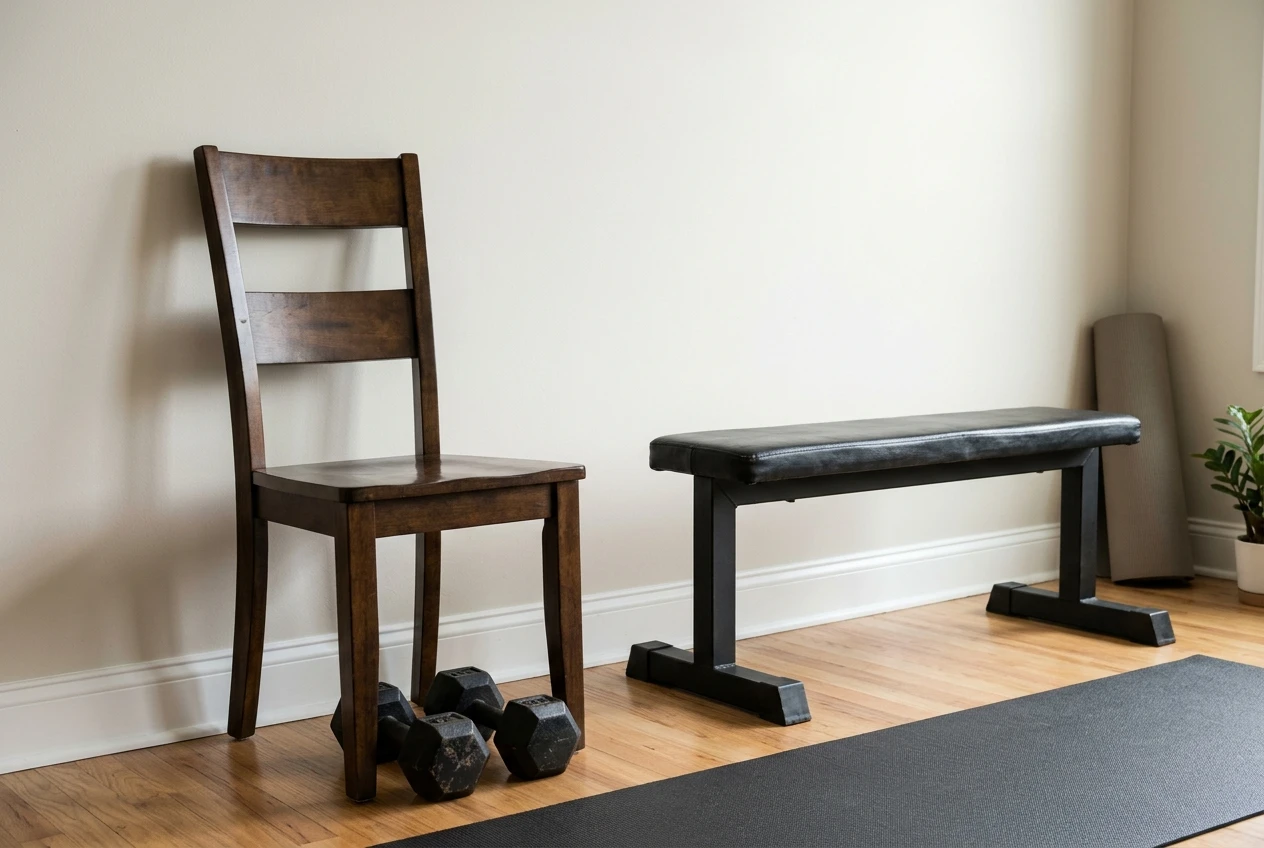
Who it suits: anyone using dumbbells who wants more exercise choices, and anyone whose strength routine has started to feel repetitive.
The free option: a sturdy chair or a solid, stable piece of furniture can do much of this job at the start. Check that it does not slide or tip, that it holds your body weight and the weight of the dumbbells, and that the surface is not slippery. If you notice any wobble, do not use it for that exercise.
When to buy a real bench: if you find yourself doing the same exercises on the same chair every week and want to press dumbbells while lying back, a flat or adjustable weight bench is a good upgrade. Look at the stated weight capacity and the stability of the frame. An adjustable bench gives more options, but a flat bench is simpler and often steadier.
What to skip for now: a bench with built-in attachments such as leg extension or preacher curl add-ons. They take up space and bring little value for the first few months.
What to skip for now, and how to buy in the right order
Several popular pieces of equipment are worth leaving until later, once you have a consistent routine:
- Treadmills, bikes and rowing machines: expensive and large. A jump rope and brisk walks cover beginner cardio.
- Power racks and barbells: useful for serious lifting, but not needed while you are still learning movement patterns.
- Kettlebell sets: good tools, but adjustable dumbbells already cover most of the same exercises.
- Gadgets and accessories: weighted vests, massage guns, smart mirrors and similar items come after you have proven to yourself that you keep showing up.
Here is a simple buying order that keeps spending low and use high:
- Resistance bands, to start immediately and learn the basic movements.
- An exercise mat, once floor work and stretching become part of your week.
- A jump rope, when you want a fast cardio option.
- Adjustable dumbbells, when bands start to feel too easy.
- A bench, after you have used a sturdy chair long enough to know you want more options.
You can swap the order of the middle items to match what you enjoy. The point is to let your current routine decide the next purchase instead of buying everything at once.
Once you have a piece or two, think about where it will live. Gear that is stored in sight and reachable gets used more often, and the guide on how to build a home workout space you’ll still use over time shows how to fit everything into your home without giving up a whole room.
Your next step
Pick just one item from this list, add it to your week, and plan your first short session using the weekly schedule guide at how to build a weekly workout schedule that balances strength, cardio and rest. A single band and ten minutes count as a real start, and every session after that is easier to begin.